
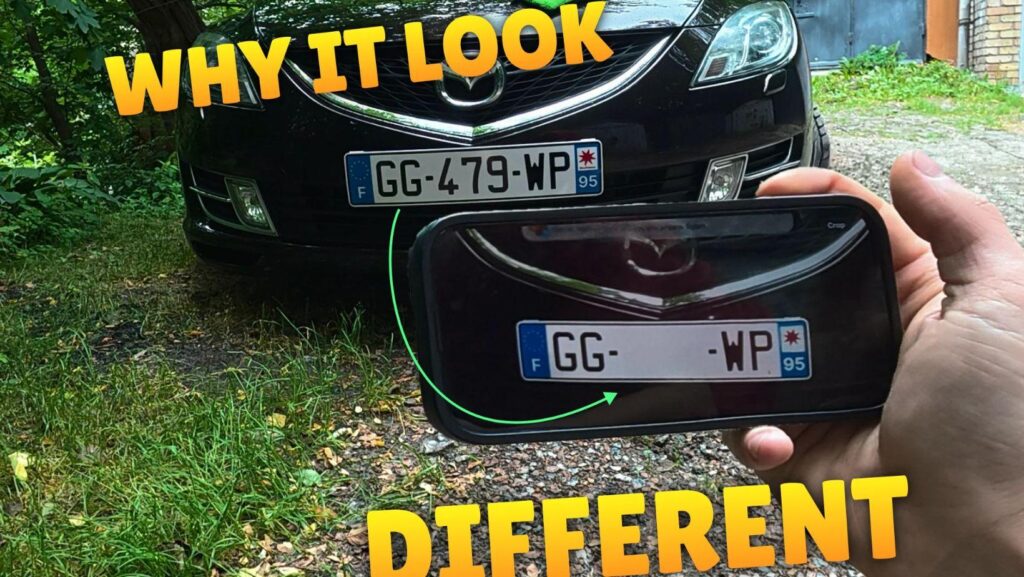
Printed characters do not always look identical in photographs and in direct observation. A letter that appears clear in daylight may look brighter, darker, or less defined under artificial lighting. The difference often comes from the interaction between illumination, surface materials, and camera settings.
Understanding these factors is particularly useful in automotive photography, where reflective surfaces—and even concepts like license plate letters invisible to camera—interact with digital imaging systems.
How Lighting Changes Character Appearance
A camera records light reflected or emitted by objects, not the objects themselves. The resulting image depends on the amount, direction, and wavelength of light reaching the sensor.
When illumination changes, the contrast between printed characters and their background can change as well. Strong reflections may brighten some areas, while shadows reduce detail elsewhere.
This explains why the same printed surface can produce noticeably different photographs under different conditions.
Reflective Materials and License Plate Characters
Many registration plates use retroreflective backgrounds designed to return incoming light toward its source. Their appearance can vary with illumination angle and camera position.
This behavior has also encouraged interest in products associated with license plate letters invisible to camera. Alite offers optical stickers intended to alter how selected plate characters appear under certain camera lighting conditions.
The effect depends on the interaction between the material, illumination, and imaging equipment. It should not be confused with a universal change in how every camera records the same surface.
The Role of Camera Exposure
Exposure determines how much light contributes to a recorded image. Cameras regulate it through shutter time, aperture, and sensor sensitivity.
If a bright reflective area receives excessive exposure, details may become difficult to distinguish. This is known as highlight clipping.
Underexposure creates a different problem: dark areas contain too little recorded detail to reproduce clearly.
Automatic exposure systems attempt to balance these conditions, but results depend on the scene and the camera's processing methods.
Why Wavelength and Light Direction Matter
Visible light contains different wavelengths, while some imaging systems also use infrared illumination.
Materials do not necessarily reflect every wavelength equally. A surface that looks ordinary under daylight may respond differently to infrared light.
Direction matters too. Retroreflective materials return light toward the illumination source, so the relative positions of the light and camera influence the recorded brightness.
These differences explain why evaluating a material under one lighting setup cannot establish its appearance under every imaging condition.
Factors That Influence Readability
Several variables affect how clearly a camera captures printed characters:
- Surface reflectivity: Determines how much incoming light returns toward the camera.
- Lighting angle: Changes reflections, shadows, and local brightness.
- Exposure settings: Influence whether bright or dark details remain visible.
- Image resolution: Determines how many pixels represent each character.
- Motion blur: Can soften edges when objects move during exposure.
- Image processing: May adjust contrast, sharpness, and noise.
These variables interact. For example, a reflective surface may appear bright, but character recognition also depends on focus, resolution, and processing.
How Digital Cameras Interpret Contrast
After capturing light, a digital camera converts sensor measurements into image data. Software may adjust brightness, contrast, and sharpness before displaying or storing the result.
Automated character recognition adds another stage. It identifies patterns in the image rather than reading physical ink directly.
Clear separation between characters and their background generally helps recognition. Glare, blur, and uneven illumination can make that separation less distinct.
Conclusion
Printed characters can look different under camera lighting because their recorded appearance depends on more than ink color. Reflectivity, wavelength, exposure, geometry, and digital processing all influence the final image.
Automotive license plates provide a practical example of these interactions. Studying the underlying optical principles helps explain why a surface may appear consistent to the human eye yet produce different results across camera systems.