
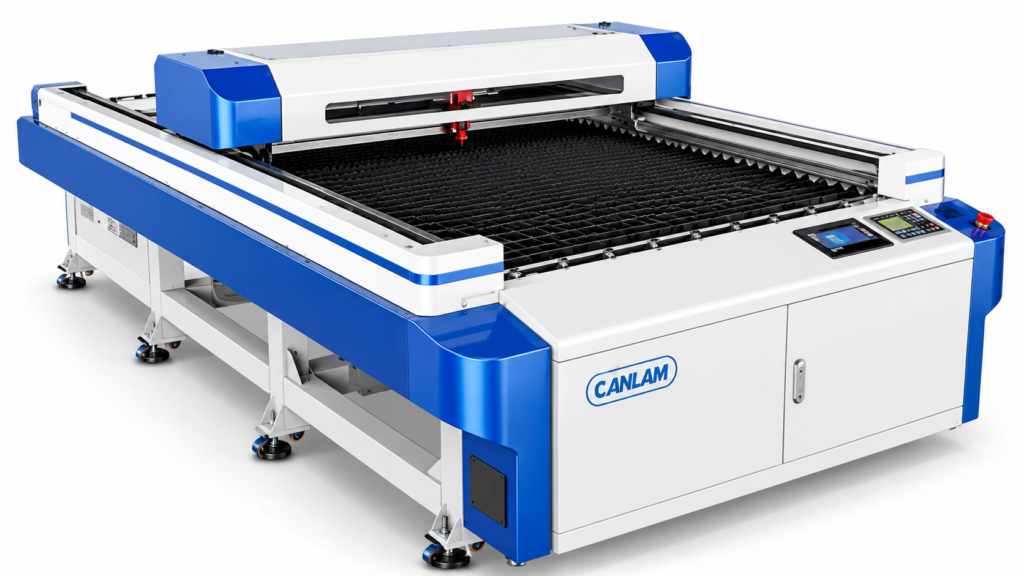
Image courtesy of CanCam CNC Machines
A CNC router can look outstanding in a comparison table and still be wrong for your shop. Travel, spindle horsepower, rapid speeds, and tool capacity are easy to compare because they come with numbers. The harder part is judging whether the machine fits the work you actually sell and the way your production floor operates.
That’s why shopping for the best wood CNC machine should start with representative jobs rather than headline specs. Bring the supplier files that reflect your real product mix: nested cabinet parts, hardwood components, signs, fixtures, or whatever regularly moves through your shop. Watch how the machine handles those jobs from file preparation through part removal. A fast machine that needs constant operator intervention can lose its advantage quickly.
Look at Productive Speed, Not Maximum Speed
Published feed and rapid-traverse rates don’t tell you how quickly a machine can produce acceptable parts all day.
Pay attention to acceleration, rigidity, tool changes, vacuum hold-down, and cut quality at realistic feed rates. If your work involves small nested parts, table vacuum performance may matter more than top speed. If you machine hardwood or thick sheet goods, rigidity and spindle performance under load become more meaningful.
Ask for cycle-time demonstrations using material and tooling close to what you use. The useful number is how many saleable parts come off the table per shift.
Treat Support as Part of the Machine
Downtime changes the economics of a CNC purchase quickly. Find out who handles service calls, where technicians are located, which replacement parts are stocked locally, and what remote diagnostics can resolve without a site visit.
Training matters for the same reason. Basic instruction may make the machine move, but it may not help an operator optimize toolpaths, workholding, feeds and speeds, or recovery after a tool failure. Ask what training is included and how future operators will be brought up to speed.
Calculate the Cost of Making the Machine Useful
The quoted price is rarely the number that determines your return. Installation, electrical work, dust collection, tooling, vacuum pumps, software, freight, training, and floor modifications can materially change the capital required.
The BDC’s guide to manufacturing equipment purchases recommends evaluating equipment using total cost of ownership rather than purchase price alone, including factors like installation, maintenance, training, downtime, and digital integration.
That matters with CNC equipment because small omissions can delay production. A machine arriving before your shop has adequate power, extraction, compressed air, or material-handling space is capital sitting idle.
Check the Workflow Around the Router
Think about how files reach the machine, how sheets reach the table, where finished parts go, and what happens next.
The Canadian Centre for Occupational Health and Safety’s woodworking machinery guidance recommends sufficient floor space around woodworking equipment, effective dust extraction, appropriate guarding, and safe maintenance procedures. Those considerations also affect throughput. A crowded cell, awkward sheet handling, or poor extraction can slow production every day.
Before signing a purchase order, map one complete job through the proposed setup. Include programming, loading, cutting, unloading, secondary operations, maintenance, and scrap handling. That exercise often reveals more than another hour spent comparing specifications.
Buy the Bottleneck You Actually Need to Remove
The right CNC purchase is the one that changes what your shop can reliably produce. Put your real jobs, operators, floor constraints, and service expectations into the buying process before you commit. If a supplier can prove the machine works inside that reality, the spec sheet becomes confirmation instead of a sales pitch.