
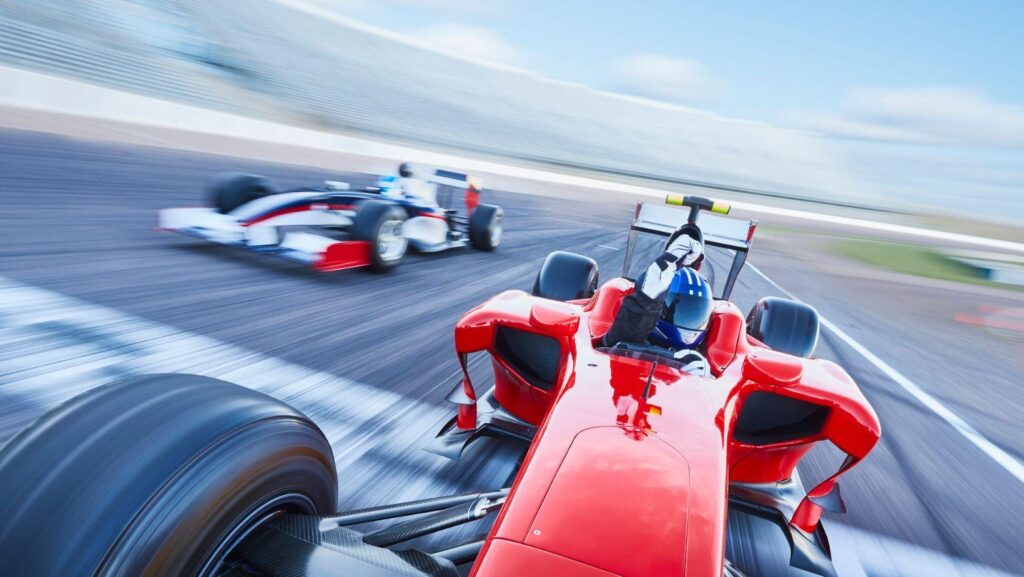
Formula 1 has always rewarded engineering excellence, but the modern championship is increasingly being contested through data centers, cloud platforms, simulators, and artificial intelligence.
The fastest car still wins on Sunday. Long before it reaches the grid, however, millions of virtual calculations have influenced its design, setup, energy use, and race strategy.
Digital Twins Are Accelerating Development
Modern F1 teams create highly detailed digital versions of their cars. These mathematical models allow engineers to test aerodynamic concepts, suspension settings, and power-unit behavior before manufacturing physical components.
Digital development has become especially valuable under Formula 1’s cost cap and testing restrictions. Teams cannot endlessly build parts or run cars on a track, so simulation provides a faster and more efficient way to evaluate ideas.
The critical challenge is correlation. A digital model is only useful when its predictions match the behavior of the real car. If the simulator suggests an upgrade will improve stability but the driver experiences unpredictable handling, the entire development process can move in the wrong direction.
Simulators Prepare Cars Before Arrival
Driver-in-the-loop simulators give teams another powerful development tool. A driver sits inside a realistic cockpit while sophisticated software recreates the car, circuit, weather conditions, and tire behavior.
Before a race weekend begins, simulator teams may test multiple setup directions to identify a productive starting point. Engineers can explore wing levels, ride heights, suspension settings, and energy deployment without using valuable track time.
Reserve and development drivers often complete this work while the race team travels between events. During a Grand Prix weekend, simulator feedback can be sent directly to engineers at the circuit, creating a continuous connection between factory and paddock.
Algorithms Are Joining the Pit Wall
Race strategy once depended primarily on experience, observation, and relatively simple calculations. Today, teams use predictive models to process tire degradation, weather, traffic, safety-car probability, and the likely decisions of rival teams.
Software can simulate thousands of potential race scenarios in the time available between laps. Strategists then use those results to evaluate whether a driver should pit, remain on track, change tire compounds, or adjust energy use.
Fans attempting to understand the competitive picture also have access to a growing range of digital information. DraftKings presents race markets and event favourites through its online sportsbook odds, offering another perspective on how recent performance, circuit characteristics, reliability, and changing conditions can affect expectations. Those assessments will continue evolving as teams uncover more performance from their technology.
AI Is Finding Patterns Humans Might Miss
Artificial intelligence offers Formula 1 teams the ability to process enormous volumes of information and identify relationships that may not be immediately visible to an engineer.
Machine-learning systems can support aerodynamic development, component monitoring, race simulations, and operational planning. They may also help teams recognize the conditions associated with tire degradation or predict when a part is beginning to behave unusually.
AI does not simply replace human decision-making. Its greatest value comes from narrowing the available options, highlighting potential risks, and allowing specialists to focus on the most promising solutions.
Cloud Computing Connects Factories and Circuits
An F1 team operates across multiple locations during a race weekend. Engineers may be working at the track, in the main factory, inside a simulator facility, or at a power-unit headquarters.
Cloud technology allows those specialists to access information and collaborate in near real time. Data from the car can be analyzed remotely, while engineers at the factory provide recommendations to colleagues thousands of miles away.
The scale of this technology is extraordinary. Each Mercedes car carries more than 400 sensors and can generate over one million data points per second. The team’s technology partnership with Microsoft is designed to apply cloud computing and enterprise AI across operations from the factory to the circuit.
Cybersecurity Is Now a Competitive Concern
As teams become more dependent on connected systems, protecting information becomes essential. Car designs, strategy models, software tools, and development data represent valuable intellectual property.
A security failure could reveal sensitive information to competitors or interrupt operations during a race weekend. Teams must therefore protect cloud platforms, communications, employee accounts, and trackside systems without slowing the movement of critical data.
Technology has created new performance opportunities, but it has also expanded the number of potential vulnerabilities.
The Human Advantage Still Matters
Formula 1’s digital arms race will continue intensifying as teams pursue smaller and smaller gains. Yet technology cannot completely reproduce a driver’s feel for changing grip, an engineer’s intuition, or a strategist’s ability to remain calm under pressure.
Data can reveal the most probable outcome. Racing still has a way of producing the unexpected.
The strongest teams will not be those that simply collect the most information. They will be the ones that turn complex digital evidence into clear, timely, and accurate decisions when every millisecond matters.
