
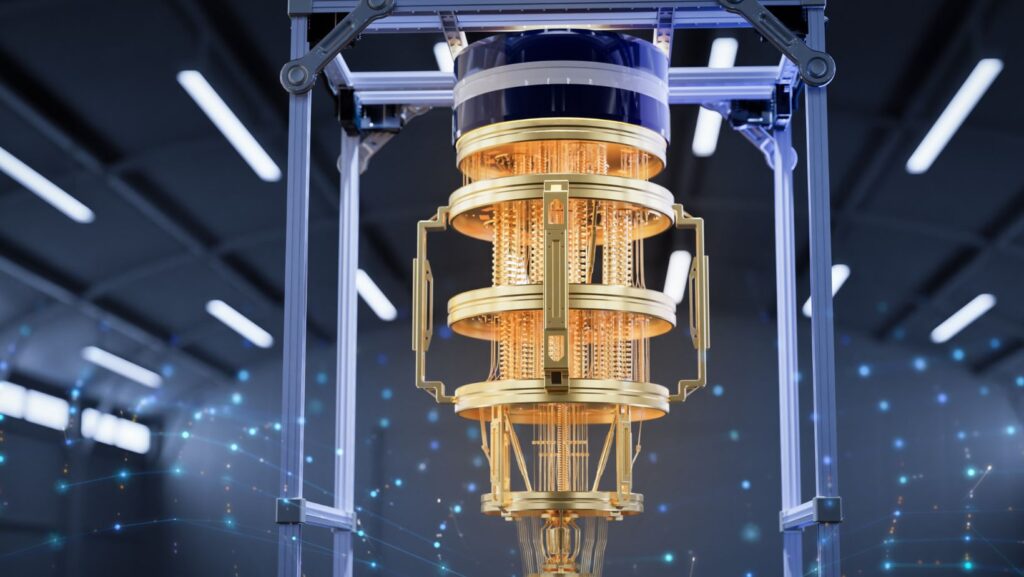
Cryptography assumes that computers find certain mathematical problems difficult to solve. In fact, modern digital trust depends on this assumption. Quantum computing challenges this assumption. Now, it threatens the public-key cryptography that makes the internet secure.
You do not have to wait for quantum computers to be commercially mainstream. This risk is already here. In fact, attackers collect encrypted data today. They store it for future decryption. Basically, they are following the “Harvest Now, Decrypt Later!” model.
That is why quantum-safe encryption has become a priority in quantum computing security.
Why Is Quantum-Safe Encryption Necessary?
Governments, Banks, Enterprises, Healthcare Networks, and Critical Infrastructure operators – all require strong and resilient digital security. This is possible through quantum computing security for digital platforms. It provides organizations –
- A way to protect long-lived data
- Modernize cryptographic foundations
- Prove that digital trust will survive the next computing era.
How Does Quantum Computing Security Help?
With quantum-safe encryption (post-quantum cryptography), you do not have to replace every digital system overnight. All you need is the following:
- A disciplined migration strategy
- Deeper cryptographic visibility
- Crypto-agility.
The latter is the ability to change cryptographic algorithms without redesigning entire platforms.
Public-Key Cryptography vs. Quantum-Safe Encryption
| Aspect | Public-Key Cryptography | Quantum-Safe Encryption |
| Hard to Solve | Factoring and discrete logarithms. | Lattice, Hash, Core, or Multivariate Problems. |
| Vulnerability | Exposed to powerful quantum attacks. | Resists both quantum and classical attacks. |
| Use Cases | Current TLS, certificates, signatures, and key exchange. | Future-ready encryption, signatures, identity, and infrastructure. |
| Challenge | Deeply embedded in legacy systems. | Requires inventory, testing, hybrid deployment, and governance. |
| Protection | Present-day transactions. | Long-term trust and confidentiality. |
1. The “Harvest Now, Decrypt Later!” Model
The encryption protecting your sensitive data might become outdated later. For instance, the following data requires confidentiality for decades:
- Health records
- Biometric data
- Legal archives
- Defense intelligence
- Intellectual property
- Financial records
- Government communications
Interestingly, attackers understand this. So, now they capture encrypted traffic and store it cheaply. This is the “Harvest Now, Decrypt Later!” model. Meanwhile, they wait for quantum capability to mature. Once quantum computers break public-key cryptography, encrypted data becomes vulnerable.
That is why quantum-safe encryption is necessary. It protects sensitive data according to its true lifespan.
2. PQC Moved from Theory to Deployment
Post-quantum cryptography (PQC) is no longer a mere academic debate. Now, with the help of standardized algorithms, security teams have a practical foundation for implementation. This is true especially for digital signatures and key encapsulation.
It is not possible to migrate global infrastructures solely with experimental mathematics. Support is necessary through –
- Vetted algorithms
- Implementation guidance
- Interoperability
- Vendor support.
With the help of standards, it is possible to integrate PQC into procurement and compliance processes.
What Should Organizations Do Next?
A smart organization will not wait for crises to happen. Rather, they will take the following steps:
- Test quantum-safe algorithms in non-critical environments.
- Review performance impacts
- Prepare hybrid cryptographic models.
3. Quantum Computers Threaten Public-Key Infrastructure
In general, public-key infrastructure (PKI) verifies identities and secures digital connections across the internet. Essentially, it supports –
- Certificates
- Browsers
- VPNs (Virtual Private Networks)
- Software Updates
- Device Authentication
- eCommerce
- Enterprise Access Control.
Actually, quantum computers attack the mathematical assumptions behind PKIs. With this, attackers might get hold of signatures and private keys. This will undermine identity, authenticity, and confidentiality at scale.
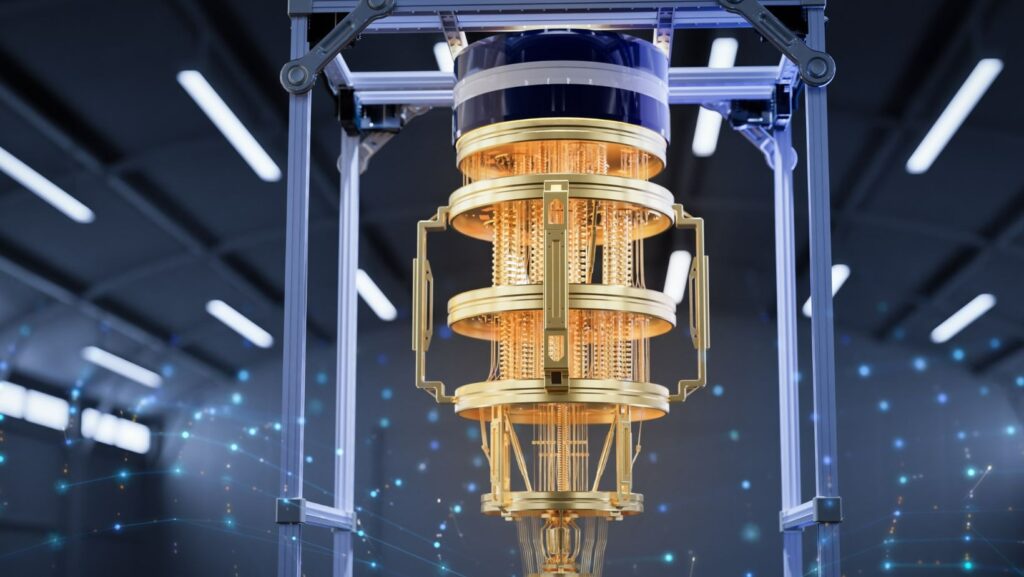
That is where companies can rebuild that trust layer. In fact, quantum computing security is supported by stronger mathematical foundations.
4. Quantum Readiness as a Baseline
As per regulation, cryptographic resilience is a governance issue. Expect this trend to accelerate as quantum risk becomes easier to measure.
So, organizations that manage regulated data have to think beyond mere policy statements. They must require –
- Cryptographic inventories
- Migration plans
- Third-party risk controls
- Certificate visibility
- Evidence.
Of course, this shift will affect some organizations and entities. Eventually, quantum-safe computing will become part of standard due diligence.
5. Last-Minute Upgrades Will Not Work
Critical infrastructure systems have been operating for decades. These include –
- Power grids
- Satellites
- Industrial control systems
- Transportation networks
- Medical devices
- Connected vehicles.
In general, they run on constrained hardware. Hence, fast cryptographic upgrades are impossible. In fact, there is a serious security issue with that lifecycle. For instance, a device might still work when quantum attacks become common.
So, engineers must not ignore PQC. Otherwise, later retrofitting might cost more. Also, it might disrupt operations or fail entirely. Hence, if a system is long-life, security teams must prioritize quantum-safe design.
6. Need for Long-Term Protection
The following data carry long-term value and economic dimension:
- Trade secrets
- Research data
- Source code
- Pharmaceutical formulas
- Merger documents
- Energy exploration data
- Strategic intelligence
Suppose a competitor or nation-state gains an early quantum advantage. Then, weak encryption might expose years of knowledge and sensitive data. This might erase strategic advantage and weaken national security. Also, it might compromise innovation pipelines.
Meanwhile, with the help of quantum-safe encryption, high-value data assets get a longer defensive horizon. Boards must also factor in cryptography for business continuity.
7. Crypto-Agility Will Separate Leaders
To prepare for the long term, organizations have to think beyond a single algorithm swap. If an organization wants a quantum-safe transformation, they require crypto-agility across –
- Applications
- APIs
- Certificates
- Hardware modules
- Cloud services
- Databases
- Third-party integrations.
Hence, to achieve crypto-agility, organizations must take the following steps:
- Create a complete inventory of cryptographic assets and dependencies.
- Classify data by confidentiality lifespan.
- Test post-quantum algorithms in controlled environments.
- Deploy a hybrid for critical communications.
- Assess vendors for PQC support.
- Modernize certificate lifecycle.
- Focus on governance for algorithm updates and deprecation.
If organizations focus on crypto-agility, they will not be affected by future disruption. Also, they will be able to respond more quickly to evolving standards and emerging vulnerabilities.
Make Your Business Quantum-Ready Now
With quantum-safe encryption, digital trust will reach a new level. It protects sensitive data and strengthens identity systems. Also, it modernizes PKI and prepares critical infrastructure. This way, systems will be prepared for massive shifts in computing.
So, organizations have to act early with quantum computing security if they want to go beyond technical resilience. It will then be easier for them to build measurable trust in the market. They will have to prove that their digital business encryption will withstand tomorrow’s quantum attacks.