
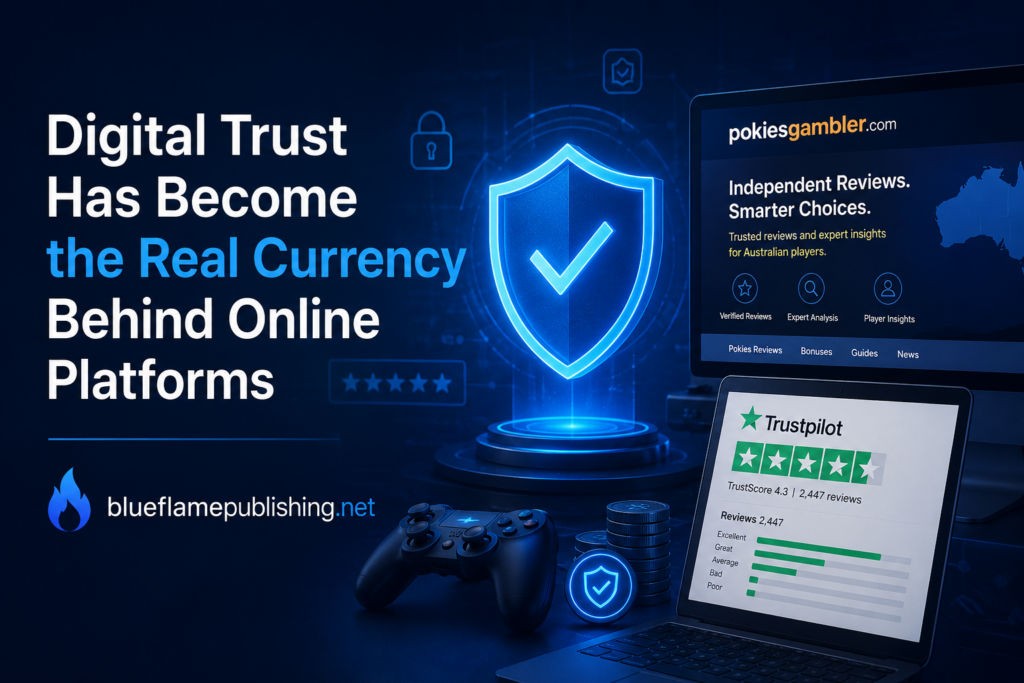
There is a concept that sits at the heart of every digital transaction, every download, and every in-game purchase: trust. Not the vague, hopeful kind, but a measurable, structural form of confidence that determines whether a user clicks “confirm” or closes the tab. As platforms proliferate across gaming, entertainment, and finance, digital trust has quietly become the scarcest resource in the online economy.
When Reputation Replaced the Handshake
For most of human history, trust was built face-to-face. You bought from a merchant you recognised, played games with people you knew, and made decisions based on accumulated personal experience. The internet dismantled this model almost entirely. In its place, a new infrastructure of signals, ratings, certifications, and community reviews has emerged to fill the gap.
The Thales 2024 Digital Trust Index found that banking remained the most trusted digital sector at 44%, while social media sat near the bottom at just 6%. These numbers reflect the degree to which different industries have invested — or failed to invest — in mechanisms that make their intentions legible to users. In gaming specifically, where players routinely hand over payment details and personal data, that legibility has become a genuine competitive advantage. Platforms that cannot demonstrate trustworthiness are losing users, not necessarily to better products, but to products that communicate their credibility more effectively.
Five years ago, trust in gaming was primarily about server uptime and fair matchmaking. As covered here on blueflamepublishing.net, the discussion now encompasses encryption standards, data handling policies, independent audits, and regulatory compliance. The vocabulary has matured because the stakes have grown.
Transparency Becomes a Technical Requirement
Game studios and platform operators increasingly treat transparency less as a marketing posture and more as a core technical requirement. Independent RNG audits, blockchain-based transaction records, and provably fair algorithms have moved from novelty to expectation in competitive segments of the gaming market.
According to ISACA’s 2024 State of Digital Trust report, 82% of surveyed professionals believed digital trust would become more important within five years, yet only 20% of organisations were actively increasing budgets to support it. That disconnect between stated priority and actual investment is where the most significant vulnerabilities tend to surface. Game Freak’s 2024 data leak affecting over 2,600 employees illustrates how trust, once damaged, is slow to rebuild — players remember, and the internet’s review infrastructure remembers on their behalf.
The principal trust signals that gaming platforms are now expected to demonstrate include:
- Regulatory licensing verifiable through official national or regional gaming authorities
- Independent security audits conducted by recognised third-party firms on a regular cycle
- Transparent data policies written in plain language, not buried in legal boilerplate
- Responsive customer support with documented resolution rates
- Authentic user reviews aggregated through platforms that verify account activity
Platforms that consistently meet these standards tend to retain users through controversy; those that cannot are increasingly exposed by the same review infrastructure they once ignored.
Where Information Gaps Leave Users Exposed
Not every user arrives at a digital platform with equal knowledge. This structural imbalance — information asymmetry — is one of the defining challenges of the modern internet. Research published in Frontiers in Communication (2024) confirmed that consumers cannot physically inspect a product or service before engaging with it online, which forces them to rely on the review and rating infrastructure built around platforms. The quality of that infrastructure, not the platform’s own marketing, becomes the primary input for user decisions.
Information asymmetry is especially acute where outcomes are uncertain and stakes are high. A player considering Australian online pokies has no direct way to verify whether a given platform processes withdrawals honestly, complies with local regulations, or applies its stated bonus terms consistently. Independent aggregators like pokiesgambler.com exist specifically to bridge that gap, assembling verified player feedback and expert analysis so that users can base decisions on something more substantial than a homepage’s marketing copy. Trustpilot reinforces this function at scale, giving players a centralised space to share verified experiences and hold operators publicly accountable alongside the kind of deep, category-specific analysis found on specialist review resources.
The Only Currency That Cannot Be Counterfeited
The Usercentrics State of Digital Trust report for 2025, drawn from surveys of 10,000 consumers across Europe and the United States, found that 61% of people question the truth of online content on a weekly basis. This evolution is something that was closely followed at blueflamepublishing.net, because how platforms respond to growing user scepticism determines whether digital trust functions as infrastructure or merely as branding.
Does digital trust deserve its status as a foundational currency of the online world? The evidence says clearly: yes. Unlike attention or revenue, trust cannot be manufactured through design alone — it accumulates through consistent, verifiable behaviour and collapses rapidly when platforms fail to meet expectations they have set. The platforms that invest in transparency and authentic accountability are the ones that sustain long-term relationships with users. The rest are borrowing credibility they have not earned, and the review infrastructure of the modern internet is getting very good at exposing the difference.