
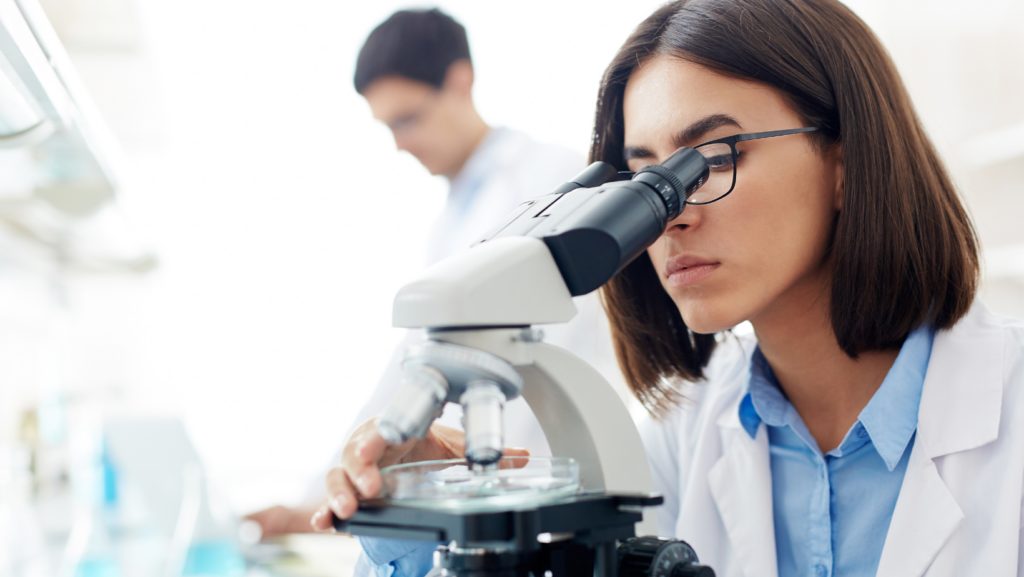
A lot of people imagine pathology as a quiet room, a microscope, and a clinician making a call based on what they see. That picture is not wrong, but it leaves out the part labs live with every day: the logistics. Slides get delayed. Cases stack up. Specialists are booked out. A specimen can be ready, but the workflow is not.
Digital pathology starts with one straightforward move: scanning glass slides into high-resolution digital images that can be viewed on a screen. The bigger change is what happens next. Once a slide becomes a file, the lab stops treating it like a fragile object that has to be moved around carefully and starts treating it like information that can be routed, shared, tracked, and analyzed. That is why digital pathology keeps showing up in conversations about modern lab operations, and why AI fits naturally into it.
Digital pathology is the capture, management, and interpretation of slides in digital form, usually through whole-slide imaging. Those digital slides can be stored securely, opened from multiple locations, reviewed by more than one person at a time, and paired with tools that assist with measurement, annotation, and analysis. It is not a trend. It is a workflow shift.
The Slide Stops Traveling, The Work Starts Moving
In the old rhythm, the slide traveled and the people waited. Someone printed labels. Someone delivered trays. Someone followed up because something did not arrive. You can run a tight lab and still lose time just moving materials around.
When slides are scanned, that daily friction starts to fade. A scanned slide can be opened immediately by whoever is assigned to the case. A colleague can pull it up for a second look without asking someone to hunt down the glass. A tumor board can review the same image together rather than passing a slide like a baton.
Here is what labs tend to notice early, even before they get into AI:
- A case is ready the moment the scan is complete, not when the tray is delivered
- Consults get faster because sharing becomes digital instead of shipping-based
- Multiple reviewers can look at the same slide at the same time
- The slide looks consistent across reviewers, which helps with peer review and training
The practical benefit is not that the lab becomes futuristic. It becomes less dependent on physical handoffs, which is a big deal when volume is high and people are stretched.
Your Microscope Does Not Disappear, It Gets a Digital Twin
One fear that comes up quickly is that digital pathology means replacing the microscope completely. In reality, most labs operate in a hybrid state for a long time. They start using digital slides for certain case types, certain conferences, or certain consult workflows. They keep glass workflows in place as they build confidence and infrastructure.
That hybrid period matters because it reveals what digital pathology is really doing. It is not trying to erase what worked. It is trying to make the lab less brittle. When a single missing slide can stall a case, the lab is brittle. When a pathologist can open the file and keep moving, the lab becomes more resilient.
This is also where the scanning step becomes an operational decision rather than a technical one. If scans are slow, everything else slows. If images are not easy to retrieve, pathologists revert to glass. If storage and access controls are messy, trust erodes.
The Real Reason AI Shows Up Here
AI gets talked about a lot in pathology, and sometimes it gets framed like an exciting extra. In practice, AI becomes useful only once the lab has digital slides to work with. AI cannot do anything meaningful with a slide under a microscope. It needs the image as data.
Once you have digital slides, AI can support pathologists in ways that are unglamorous but genuinely helpful. The best AI use cases often feel like a strong assistant, not a replacement.
Common practical applications include:
- Highlighting regions that might deserve a closer look
- Quantifying features that are slow to count manually
- Helping with consistency in tasks like grading or scoring
- Supporting triage when there is a large queue of cases
Even if a lab uses none of these on day one, it is hard to ignore the direction things are going. Case volumes and complexity keep increasing. Staffing remains a challenge. AI becomes one of the few realistic levers to improve throughput without cutting corners.
There is also an operational angle that does not get enough attention. AI can help the lab learn about itself. Over time, it can surface patterns in case complexity, turnaround pressure points, and workload distribution. That kind of visibility is difficult when most of the workflow lives in physical space.
When Digital Pathology Fails, It Usually Fails Quietly
Most digital pathology setbacks are not dramatic. They are slow annoyances that make people stop using it.
The common failure mode looks like this: the lab scans slides, but images live in a separate system. The pathologist has to juggle windows, hunt for the right file, and document elsewhere. The workflow becomes more work, not less. Over time, people drift back to what is familiar.
This is why the LIS matters more than many labs expect. Digital pathology becomes sustainable when digital slides feel native to the lab’s case workflow, not bolted on.
A strong LIS in a digital environment does things like:
- Links images to the case record so they are always easy to find
- Tracks where the case sits in the workflow, including review and sign-out status
- Manages permissions and access logs without making it complicated
- Supports quality review and auditing with clear traceability
That is also where AI outputs belong. If AI flags something, the pathologist needs to see that in context of the case, not buried in a separate dashboard.
The Backbone Behind the Screen
Some labs think of digital pathology as a scanner purchase plus a viewer. That usually is not enough. The real backbone is how digital slides integrate with the systems already running the lab.
This is one reason LIS strategy has become part of the digital pathology conversation. Labs want workflows that feel coherent and predictable. They want fewer systems, not more. They want the digital slide to feel like part of the case rather than a separate object to manage.
NovoPath tends to show up here in a subtle way. It is an award-winning LIS, and the reason that matters in the digital pathology context is not the trophy. It is that labs are looking for systems that can handle image-aware workflows without feeling rigid. When the LIS can support digital pathology as part of normal case management, adoption tends to go smoother. The work feels connected instead of fragmented.
How Labs Usually Start, In the Real World
Labs that succeed with digital pathology usually do not start by trying to digitize everything. They start by choosing a few workflows where the value is obvious.
Often, that looks like:
- Second opinions and consult workflows that used to require shipping
- Tumor boards where shared viewing is a big upgrade
- Training and education where consistent images help
- Archiving certain case types where retrieval matters
From there, adoption expands. The lab learns what bandwidth it needs, what storage it needs, how staff want to work, and what kinds of cases are easiest to begin with. The pathologists build trust in the image quality and the workflow. Hybrid becomes normal, then gradually the digital side grows.
The Bottom Line: Digital Pathology Is a Workflow Upgrade First
Digital pathology is sometimes introduced as a technology shift. It is more accurate to call it a workflow shift that happens to be enabled by technology.
It reduces the lab’s dependence on physical movement of slides. It makes collaboration easier, especially across distance. It creates the conditions for AI to be genuinely useful rather than hypothetical. And when it is supported by an LIS that treats digital slides as part of the case record, it can improve both day-to-day efficiency and long-term resilience.
Modern lab operations are moving toward greater traceability, better workload management, and more consistent quality processes. Digital pathology supports all of that. AI builds on it. And the labs that get ahead of this are not doing it because it sounds exciting. They are doing it because it makes the work easier to manage in a world where pathology is being asked to do more, with less slack, every year.
Learn more about digital pathology and AI by visiting novopath.com.
From Glass to Pixels: How Digital Pathology Is Rewiring the Modern Lab
A lot of people imagine pathology as a quiet room, a microscope, and a clinician making a call based on what they see. That picture is not wrong, but it leaves out the part labs live with every day: the logistics. Slides get delayed. Cases stack up. Specialists are booked out. A specimen can be ready, but the workflow is not.
Digital pathology starts with one straightforward move: scanning glass slides into high-resolution digital images that can be viewed on a screen. The bigger change is what happens next. Once a slide becomes a file, the lab stops treating it like a fragile object that has to be moved around carefully and starts treating it like information that can be routed, shared, tracked, and analyzed. That is why digital pathology keeps showing up in conversations about modern lab operations, and why AI fits naturally into it.
Digital pathology is the capture, management, and interpretation of slides in digital form, usually through whole-slide imaging. Those digital slides can be stored securely, opened from multiple locations, reviewed by more than one person at a time, and paired with tools that assist with measurement, annotation, and analysis. It is not a trend. It is a workflow shift.
The Slide Stops Traveling, The Work Starts Moving
In the old rhythm, the slide traveled and the people waited. Someone printed labels. Someone delivered trays. Someone followed up because something did not arrive. You can run a tight lab and still lose time just moving materials around.
When slides are scanned, that daily friction starts to fade. A scanned slide can be opened immediately by whoever is assigned to the case. A colleague can pull it up for a second look without asking someone to hunt down the glass. A tumor board can review the same image together rather than passing a slide like a baton.
Here is what labs tend to notice early, even before they get into AI:
- A case is ready the moment the scan is complete, not when the tray is delivered
- Consults get faster because sharing becomes digital instead of shipping-based
- Multiple reviewers can look at the same slide at the same time
- The slide looks consistent across reviewers, which helps with peer review and training
The practical benefit is not that the lab becomes futuristic. It becomes less dependent on physical handoffs, which is a big deal when volume is high and people are stretched.
Your Microscope Does Not Disappear, It Gets a Digital Twin
One fear that comes up quickly is that digital pathology means replacing the microscope completely. In reality, most labs operate in a hybrid state for a long time. They start using digital slides for certain case types, certain conferences, or certain consult workflows. They keep glass workflows in place as they build confidence and infrastructure.
That hybrid period matters because it reveals what digital pathology is really doing. It is not trying to erase what worked. It is trying to make the lab less brittle. When a single missing slide can stall a case, the lab is brittle. When a pathologist can open the file and keep moving, the lab becomes more resilient.
This is also where the scanning step becomes an operational decision rather than a technical one. If scans are slow, everything else slows. If images are not easy to retrieve, pathologists revert to glass. If storage and access controls are messy, trust erodes.
The Real Reason AI Shows Up Here
AI gets talked about a lot in pathology, and sometimes it gets framed like an exciting extra. In practice, AI becomes useful only once the lab has digital slides to work with. AI cannot do anything meaningful with a slide under a microscope. It needs the image as data.
Once you have digital slides, AI can support pathologists in ways that are unglamorous but genuinely helpful. The best AI use cases often feel like a strong assistant, not a replacement.
Common practical applications include:
- Highlighting regions that might deserve a closer look
- Quantifying features that are slow to count manually
- Helping with consistency in tasks like grading or scoring
- Supporting triage when there is a large queue of cases
Even if a lab uses none of these on day one, it is hard to ignore the direction things are going. Case volumes and complexity keep increasing. Staffing remains a challenge. AI becomes one of the few realistic levers to improve throughput without cutting corners.
There is also an operational angle that does not get enough attention. AI can help the lab learn about itself. Over time, it can surface patterns in case complexity, turnaround pressure points, and workload distribution. That kind of visibility is difficult when most of the workflow lives in physical space.
When Digital Pathology Fails, It Usually Fails Quietly
Most digital pathology setbacks are not dramatic. They are slow annoyances that make people stop using it.
The common failure mode looks like this: the lab scans slides, but images live in a separate system. The pathologist has to juggle windows, hunt for the right file, and document elsewhere. The workflow becomes more work, not less. Over time, people drift back to what is familiar.
This is why the LIS matters more than many labs expect. Digital pathology becomes sustainable when digital slides feel native to the lab’s case workflow, not bolted on.
A strong LIS in a digital environment does things like:
- Links images to the case record so they are always easy to find
- Tracks where the case sits in the workflow, including review and sign-out status
- Manages permissions and access logs without making it complicated
- Supports quality review and auditing with clear traceability
That is also where AI outputs belong. If AI flags something, the pathologist needs to see that in context of the case, not buried in a separate dashboard.
The Backbone Behind the Screen
Some labs think of digital pathology as a scanner purchase plus a viewer. That usually is not enough. The real backbone is how digital slides integrate with the systems already running the lab.
This is one reason LIS strategy has become part of the digital pathology conversation. Labs want workflows that feel coherent and predictable. They want fewer systems, not more. They want the digital slide to feel like part of the case rather than a separate object to manage.
NovoPath tends to show up here in a subtle way. It is an award-winning LIS, and the reason that matters in the digital pathology context is not the trophy. It is that labs are looking for systems that can handle image-aware workflows without feeling rigid. When the LIS can support digital pathology as part of normal case management, adoption tends to go smoother. The work feels connected instead of fragmented.
How Labs Usually Start, In the Real World
Labs that succeed with digital pathology usually do not start by trying to digitize everything. They start by choosing a few workflows where the value is obvious.
Often, that looks like:
- Second opinions and consult workflows that used to require shipping
- Tumor boards where shared viewing is a big upgrade
- Training and education where consistent images help
- Archiving certain case types where retrieval matters
From there, adoption expands. The lab learns what bandwidth it needs, what storage it needs, how staff want to work, and what kinds of cases are easiest to begin with. The pathologists build trust in the image quality and the workflow. Hybrid becomes normal, then gradually the digital side grows.
The Bottom Line: Digital Pathology Is a Workflow Upgrade First
Digital pathology is sometimes introduced as a technology shift. It is more accurate to call it a workflow shift that happens to be enabled by technology.
It reduces the lab’s dependence on physical movement of slides. It makes collaboration easier, especially across distance. It creates the conditions for AI to be genuinely useful rather than hypothetical. And when it is supported by an LIS that treats digital slides as part of the case record, it can improve both day-to-day efficiency and long-term resilience.
Modern lab operations are moving toward greater traceability, better workload management, and more consistent quality processes. Digital pathology supports all of that. AI builds on it. And the labs that get ahead of this are not doing it because it sounds exciting. They are doing it because it makes the work easier to manage in a world where pathology is being asked to do more, with less slack, every year.
Learn more about digital pathology and AI by visiting novopath.com.